The 5 Types of Skill Blindness
· Thoughts
As part of writing up a PhD you are supposed to write a Researcher Positionality statement, and I wrote mine the other week. It was not an easy thing to write - being aware of your position takes a level of being able to sit outside yourself to recognise what brought you to this topic, why it matters to you personally, and (most importantly) why you are the right person to be conducting this research - and I struggled to work out how much to reveal and how much to hold back.
In the end, I wrote about my experience and work history, including my experience with counselling, but I also shared my own experiences with being blind to my skills, and that’s what I’m going to talk about in more depth in this edition of Pondering Careers.
The topic of my PhD is “How do young people connect what they do with the skills they build?” and, while there are a number of very important reasons why I care about this, I also bring my own first-hand experience of skill blindness to the topic. Here’s how I wrote it for the positionality statement:
As a researcher-practitioner, my position is one of first-hand experience with the issue at play, which drives my intent to improve the situation for others. I have worked as a Career Counsellor in various youth-focused settings, including a university and as part of the National Career Institute, and operate a social enterprise which supports in-school Career Development Practitioners (CDPs) with career education learning resources and information, but my career originally began within the Australian Defence Force (ADF) as an Air Traffic Controller. On leaving the ADF, I faced a common dilemma where I knew that in theory I had developed complex and practical skills, but I could not see how to apply these to alternative settings as a civilian (K. Becker et al., 2023). I knew that working as an Air Traffic Controller was no longer an option, but beyond that the only options I could conceive of were military adjacent or supermarket night fill. This was despite being a degree-qualified adult with a father who was working at that time as a Careers Advisor himself.
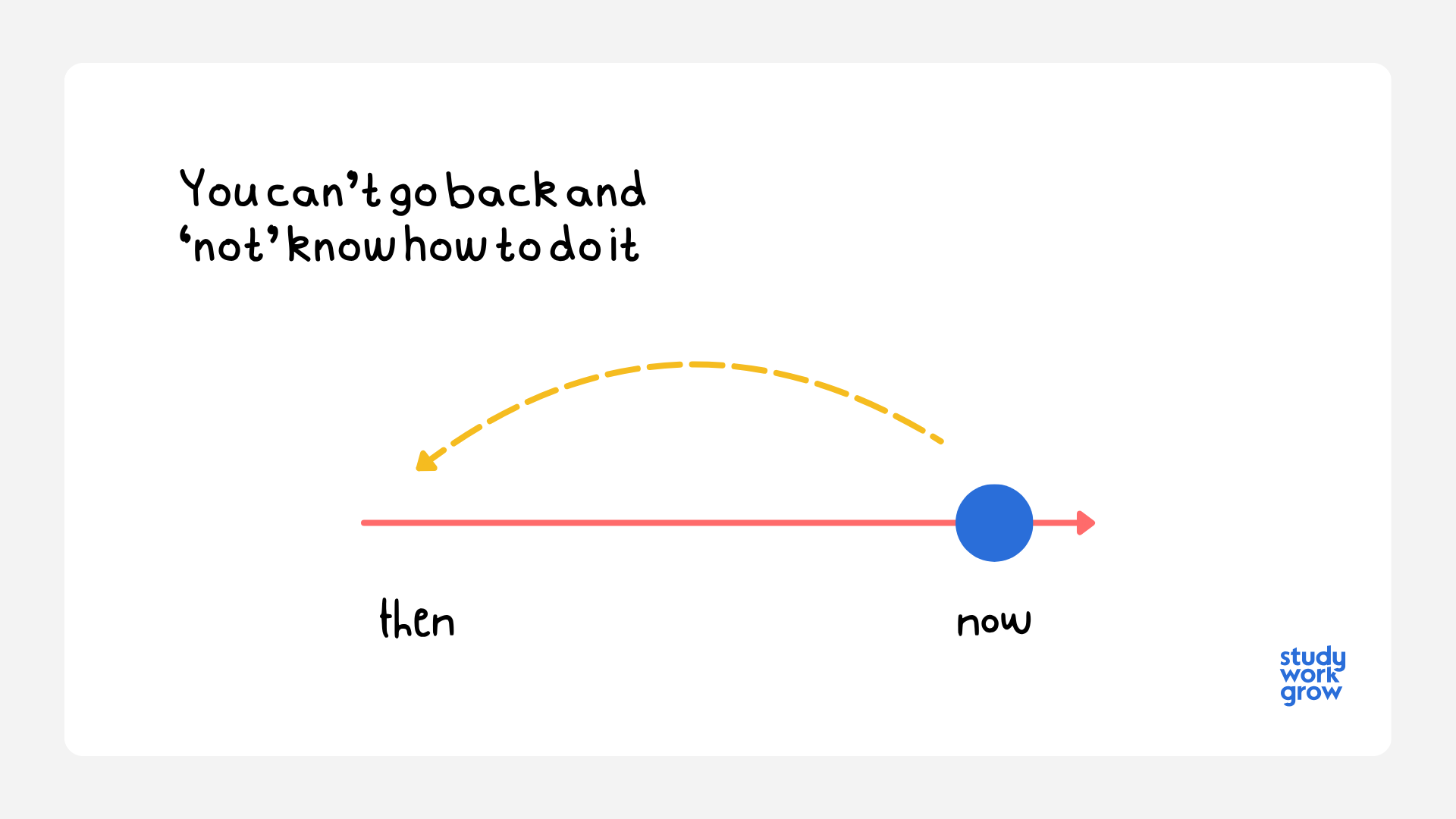
Basically, the position I found myself in was a common one. I couldn’t go back to the work I had previously done, which was specific to one industry and context (and really to just one or two organisations), and I didn’t know enough about adjacent industries which also need those kinds of skills to even know where to look. I also couldn’t really see my own skills - I figured I was good at problem solving, organising things, and leadership, but not with enough clarity to work out where that might help me fit.
So I applied for two jobs - one with a local supermarket (I figured I could stock shelves at night) and the other was for a secret squirrel-type government role, which felt quite close to what I had done in the RAAF, and they also make a point of hiring people with a diverse range of experiences.
In hindsight, there are loads of local, flexible, and engaging jobs I could have applied for which wouldn’t have left me working nights or moving to Canberra. Cairns has both a thriving maritime industry and an international airport, both of which could have offered a number of roles. And that’s without looking at all the project management or government jobs I could have explored.
But that’s what happens when you are blind to your skills - you can’t see them, or understand how they could help you.
There are five types of skill blindness
In my research, I’ve spent a lot of time looking at how we understand our capabilities and how we perceive them. If I want to understand how young people connect their actions and experiences with their skills, then I first need to understand the actual processes we go through in identifying, acknowledging, and articulating our skills, and I keep coming up against that fact that, without support, it’s almost impossible to get a complete and accurate picture of what you’re capable of.
I’ve boiled the causes for this into five different factors or types, each with its own implications, and explained how I see them:
Type 1 - You’ve got the ‘Curse of Knowledge’
Once you can do it, you can’t remember what it’s like to not do it, so it doesn’t feel like a skill.
Walking/rolling, talking, breathing, making breakfast, tying your shoes - all things that you can’t imagine not being able to do today, but these are all skills that took you quite a while to learn. The curse of knowledge happens when, once you know how to do something, you can’t un-know it, and you lose the ability to picture what it was like before. The skill feels like it was always there, so it stops looking like a skill at all and starts looking like common sense.
Colin Camerer, George Loewenstein, and Martin Weber named it in 1989, in a paper about economics of all things. The classic demonstration came a year later in Elizabeth Newton’s tapping study, where one person taps out a song on a table and another has to guess it. Tappers expect listeners to get it about half the time, and listeners get it right about one time in forty, because the tapper hears the tune in their head and the listener hears tapping.
The same thing happens with abilities. Once a task is easy, you assume everyone finds it easy, or that it takes no particular effort, so it never makes it onto your list. Plus, the better you are at something, the less visible it is to you.
When I was growing up, my Dad would always want to walk in-step. He had served in the British Army, and he would fall into step with whoever he was walking beside, including me, even when I had no idea what he was on about. Then I left school and joined the RAAF, and literally the first thing they teach you is how to walk in step. We were marched with our bags to our rooms and you pick it up really quickly, so now I still also walk in-step everywhere, and, like my Dad, I can’t imagine what it’s like to not be in step.
This shows up in a few ways:
-
People who can network with a room full of strangers but say they’re ‘just chatty’ (we’ll come back to the ‘just’ bit later)
-
Admin managers who have no idea how someone has made such a mess with the scheduling software
-
A parent (*cough* Rob Sattler) not understanding why their teenager can’t remember to turn the light and fan off before school
These people have skills they can’t imagine not having.
Side note: this one has cousins in the hard-easy effect, where we’re overconfident on hard tasks and underconfident on easy ones, and the top end of the original Dunning-Kruger curve, where the people who are good assume everyone else is too. I wrote about Dunning-Kruger in edition 74.
Type 2 - Tacit Knowledge
Once you can do it, it goes automatic and you forget how
This is tacit knowledge. Try telling someone how to tie their shoelaces without using your hands. Most people can’t; they have to do it to remember it. The steps are still in there somewhere, but they’ve been packed away where words can’t reach them.
Michael Polanyi put it in one line back in 1966: “we can know more than we can tell”. He argued this is a normal part of how skill works. As a skill gets practised the steps drop below awareness, and the more practised the skill, the less of it you can describe.
Donald Rumsfeld would have called this ‘unknown-knowns’ in his matrix, things that we don’t know that we know.
Which is the problem. A skill you can’t put into words is a skill you can’t claim. When someone asks “what are you good at?”, the skills you’ve practised most are the ones that have vanished from view, and what comes to mind instead is the stuff you’re still learning, because that’s where your attention is.
This often shows up as intuition; such as when an experienced nurse has a ‘feeling’ about a patient who’s about to go downhill, or a racing driver who squeezes through a gap in the other racers - the nurse might act, even if there’s no hard evidence about his patient yet, and the driver hasn’t had time to get out her measuring tape, but they are usually correct in their assumptions. Neither of them would necessarily call those decisions ‘skill’, even though there’s a high level of skill involved.
Type 3 - Imposter Phenomenon
You can do it, but you think it was luck, or timing, or a fluke, or anything but your skill.
Imposter phenomenon is insidious and rude - while the first two types of skill blindness will hide your skill from you, this one leaves the skill but takes away the credit. Every success gets explained by something other than your ability, so the ability never gets counted, and over time you build an account of your working life in which you’ve been lucky for twenty years.
Pauline Clance and Suzanne Imes were working with women who had every objective marker of success and were privately convinced they were frauds about to be found out, and in 1978 they wrote it up as the impostor phenomenon. Successes were put down to luck, timing, charm, or other people being generous, while failures were taken as the truth. The pattern has since turned up across genders and fields, and it’s common in people who are, by any outside measure, good at what they do.
A quick note on the name, because it matters. Clance and Imes called it a phenomenon, and that’s the right word. It isn’t a syndrome, it isn’t in any diagnostic manual, and you don’t ‘have’ it. It’s a pattern of thinking that a lot of competent people fall into, and calling it a syndrome makes it sound like an illness, which it isn’t.
I’m not going to give you examples - I would put money on the fact that you’ve felt like an imposter at one time or another, so my challenge to you is to think about if it could have actually been your skills that got you into that position, and how acknowledging that might reframe your thinking.
Type 4 - Invisible skills
You can do the thing, but you don’t see it as a skill.
Some work isn’t counted as work by anyone, including the person doing it, and if the work doesn’t count then neither do the skills inside it. The giveaway is the word ‘just’. ‘Just an admin assistant’. ‘Just a mum’. ‘Just helping out in the business’. Every time ‘just’ goes in front of a job, the skills in it go unnamed.
Arlene Kaplan Daniels coined the term invisible work in 1987, writing about women’s unpaid work. If the work is unpaid, domestic, low status, or done by people society doesn’t take seriously, the skills in it don’t get a name. Susan Leigh Star and Anselm Strauss extended it to the workplace twelve years later: any task that keeps the organisation running smoothly is invisible, because when it’s done well nothing goes wrong and no one notices.
This one is social rather than cognitive. You can’t see your skills because the people around you never named them, and you learned not to either. Saying it out loud breaks a social rule, and the rule is a very old one. Humility is a virtue in pretty much every major religion. Christianity teaches it throughout (Luther built a good deal of his theology on the idea that your good works earn you nothing), Buddhism counts pride among the fetters that hold you back, Islam treats humility as a virtue and arrogance as a sin, Judaism describes Moses as the most humble man on earth, and Sikhism lists humility as one of its five virtues. The secular versions are tall poppy syndrome here and the Law of Jante in Scandinavia. If you grew up inside any of these, playing down your abilities is good manners, and you’ve probably been practising it since you were little.
I find this type skill blindness truly sad. I remember overhearing a conversation not long back between two acquaintances - we were in a petrol station, and the server was asking the gentleman she was serving what he had been up to. He said he was ‘just a gardener’ and my heart broke a little bit. There’s no ‘just’ about someone being employed in a decent, sustainable job that suits their skills and attributes. Gardeners do important, skilled, and difficult work in a variety of conditions. It’s not lesser work or lesser skilled, but our society doesn’t value those skills so they don’t count.
Type 5 - The Availability Heuristic
You can do it, but you don’t have the words to name it as a skill.
The availability heuristic sits underneath the other four types of blindness, and Amos Tversky and Daniel Kahneman described it in 1973: when we make a judgement, we reach for whatever comes to mind most easily, and we treat ease of recall as a measure of how common or how likely something is. Things that have names and recent examples come to mind first.
This means that we can think of skills that have familiar names (like communication, teamwork, welding, initiative, cooking, writing functions in excel) but tasks and things that we do that don’t have clear, easy, memorable labels don’t even come to mind. The skills you can see are the ones you have language for, and the language we have for skills is thin, inconsistent, and mostly built around credentials.
One of the things I’ve noticed in all my work exploring the various skills taxonomies - the big official lists of skills that governments and large organisations build - is that because they’re only concerned with ‘work-related’ skills, anything that isn’t explicitly required for a job doesn’t get included. This means a lot of the basics don’t appear, even though they’re incredibly important, like sharing resources, or recognising when someone is upset. And the skills required for less formal kinds of work, like artists and musicians, get lumped into single all-encompassing entries like ‘creativity’ that don’t come close to describing the different kinds of creativity needed to write a song versus throw a pot.
This is why it’s so much harder for young people who haven’t had access to formal skill-building activities to describe their skill sets. Here’s an example:
-
Kid A did debating and a leadership camp - they’ve been told verbally that they built communication and teamwork skills, and received a certificate restating those skills.
-
Kid B was too busy helping Dad handle the bank paperwork for the business, minding younger siblings, and working on weekends at the fast food place to get involved with debating or apply for school leadership. They’ve built a similar skill set to Kid A, but have never been told that by someone in authority, or presented with any written evidence.
This is the type of skill blindness that really got me stumped when I was first looking for post-RAAF roles. I kept reaching for my military-aligned skills, and couldn’t translate them into another context.
Side note: the formal name for not having a word for something you experience is hypocognition, revived by Kaidi Wu and David Dunning in 2018 (yes, the same Dunning).
What can we do about this?
Good question. So, the first two types of skill blindness are inevitable. There’s not much you can do, other than be aware that they exist, and check if you’re overlooking something that actually counts as a skill because you’re so familiar (can’t see the forest for the trees comes in here). Use your ‘phone-a-friend’ card and ask someone else which skills they think you have, or break down the tasks you do into parts and look for the skills you need to do each part.
The third type of blindness, imposter phenomenon, is not inevitable, but it is tricky to overcome. Knowing that it’s a common cause of people overlooking their own skills can sometimes be enough to make you ask yourself the question, ‘am I an imposter, or should I actually be here?’ I’m still working on this one myself - but trying to stop myself from getting in my own way more often.
The last two are not something that any one person can tackle alone, because they are forms of blindness that derive from how we value and speak about skills in our society. The solution here is inclusion - going beyond the workforce, and asking a wide range of people what tasks they engage in each day, for example, or ensuring that skill descriptions in a taxonomy are checked explicitly for bias flags before publishing. And for those who work with young people, it comes down to naming skills, and pointing out where they are built, wherever that might be.